Limestone Collection
Formed over hundreds of millions of years in ancient marine and lacustrine environments, Indian Limestone is celebrated worldwide for its compact microcrystalline structure, clean horizontal cleavage planes, and rich mineral depth. Mined across prominent geological formations—including the Cuddapah basin of Andhra Pradesh, the Vikarabad region of Telangana, and the Vindhyan beds of Kota and Chittorgarh in Rajasthan—Indian limestone offers an organic alternative to conventional stone flags.While quartzitic sandstone delivers a pronounced, rugged riven cleft, Indian limestone splits along natural, uniform lamination lines to yield a flatter, smoother underfoot surface. Paired with diamond-sawn edges for sleek 3–5 mm joints, it is globally specified for contemporary urban terraces, swimming pool decks, commercial lobbies, and heritage driveways.
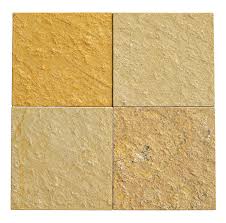
A high-density, frost-resistant Indian limestone displaying warm golden-honey, amber, and olive-ochre tones with natural clouding. Featuring a flatter cleft than sandstone, near-zero porosity, and excellent slip resistance, Kota Honey is widely exported to Europe, the UK, and Australia as an uplifting, warm alternative to grey and dark paving flags. It captures natural sunlight across shaded courtyards, pool surrounds, and residential terraces while remaining cool under bare feet.
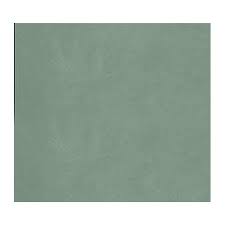
Kota Green Limestone (commercially exported as Kota Green Stone, Lime Green, or Olive Kota) is the signature calcareous stone extracted from the Suket–Ramganj Mandi geological belt in the Kota district of Rajasthan, India. While it belongs to the broader "Kota Blue" sedimentary formation, Kota Green is hand-selected from specific quarry benches where trace chlorite minerals and ferrous silicates impart a distinctive muted sage-green to greenish-slate hue. Renowned for its natural flat-cleaved split, high mechanical density, and ultra-low water absorption, it provides an organic, slip-resistant surface that remains cool under direct solar radiation.
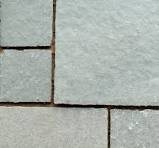
Kota Blue Limestone is an ultra-dense, fine-grained calcareous stone quarried in the Kota–Ramganj Mandi district of Rajasthan, India. Characterized by its signature cool bluish-grey to greenish-slate hue, it is renowned globally for its natural flat-cleaved split surface, minimal porosity, and extreme compressive strength.Unlike conventional soft limestones, Kota Blue features an exceptionally compact calcite matrix (CaCO3 > 75%) with water absorption under 0.60%, making it fully resistant to sub-zero frost spalling and surface flaking.
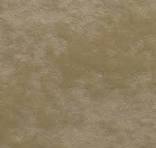
Kota Brown Limestone (commercially known as Kota Honey, Brown Kota Stone, or Chocolate Kota) is a fine-grained, microcrystalline calcareous stone quarried in the Kota–Ramganj Mandi belt of Rajasthan, India.It features an earthy, warm color palette ranging from cocoa brown and hazelnut to rich caramel and olive-tan undertones. Unlike rough sandstones, Kota Brown naturally splits into a flatter, smoother cleft surface while maintaining exceptional geological density (2.60–2.68 g/cm}^3) and an ultra-low water absorption rate (< 0.60\%).Naturally frost-proof and resistant to algae growth, it is widely exported to the UK, Europe, and Australia as an earthy, warm alternative to grey and black flags. Its dark, rich tones naturally disguise leaf stains, garden soil, and tire marks, making it ideal for residential patio packs, driveway cobbles, and high-traffic commercial flooring.
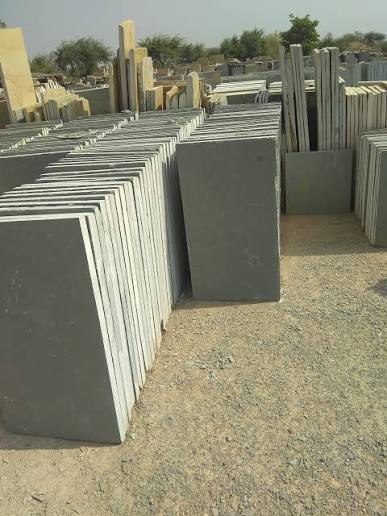
Bring warm, earthy sophistication to garden patios and outdoor dining areas with Nimbahera Brown Calibrated Limestone Paving. Direct-quarried in Rajasthan's Chittorgarh belt, these slabs feature a flatter, smoother cleft than sandstone, paired with clean diamond-sawn straight edges for modern 3–5 mm jointing. Calibrated to a uniform 22 mm thickness for level, swift installation on full mortar beds, Nimbahera Brown displays deep chocolate, cocoa, and warm walnut tones. With an ultra-low water absorption rate under 0.5% and tested freeze-thaw endurance, it provides a hard-wearing, stain-resistant natural stone surface that handles heavy rain, frost, and intensive foot traffic.
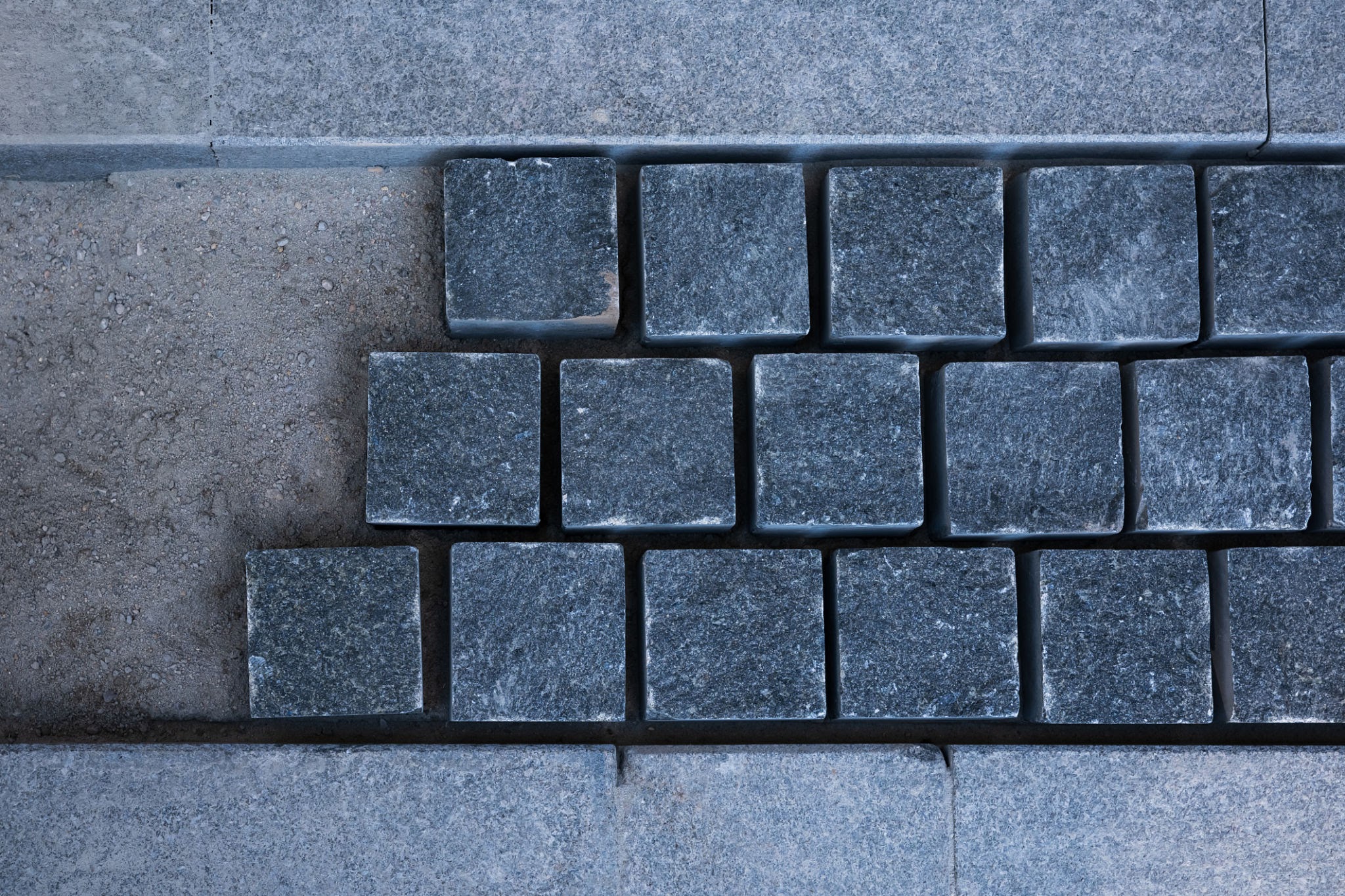
Tandur Limestone (internationally recognized as Tandur Blue, Tandur Grey, Tandur Yellow, or Shahabad Stone) is quarried in the Tandur region of the Vikarabad district (Telangana) and adjacent parts of Karnataka, India. Unlike Kota stone from Rajasthan or Kadappa from Andhra Pradesh, Tandur Limestone is celebrated for its natural split cleavage that yields an exceptionally flat, smooth-riven surface. It is exported in substantial volumes to the UK, Ireland, Belgium, Germany, and the Middle East for both contemporary outdoor landscaping and hard-wearing interior architectural flooring.
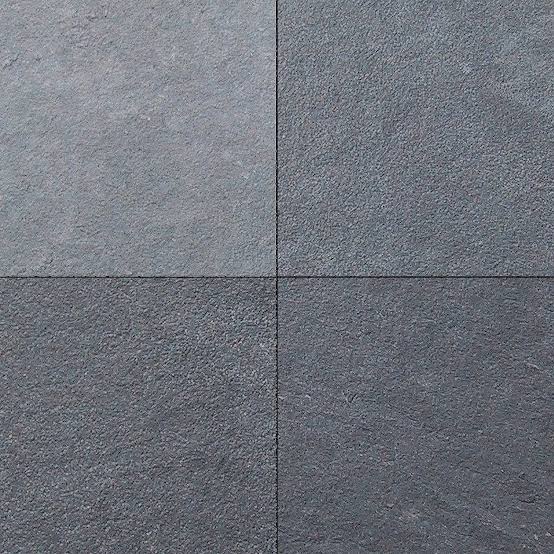
Kadappa Black Limestone (Cuddapah Black) is one of the most functionally versatile natural stones exported from India. Its compact microcrystalline structure, low porosity (< 0.8%), high compressive strength (120–165MPa), and deep monochrome palette make it suitable across exterior landscaping, residential architecture, commercial infrastructure, and industrial environments.