Limestone Collection
Formed over hundreds of millions of years in ancient marine and lacustrine environments, Indian Limestone is celebrated worldwide for its compact microcrystalline structure, clean horizontal cleavage planes, and rich mineral depth. Mined across prominent geological formations—including the Cuddapah basin of Andhra Pradesh, the Vikarabad region of Telangana, and the Vindhyan beds of Kota and Chittorgarh in Rajasthan—Indian limestone offers an organic alternative to conventional stone flags.While quartzitic sandstone delivers a pronounced, rugged riven cleft, Indian limestone splits along natural, uniform lamination lines to yield a flatter, smoother underfoot surface. Paired with diamond-sawn edges for sleek 3–5 mm joints, it is globally specified for contemporary urban terraces, swimming pool decks, commercial lobbies, and heritage driveways.
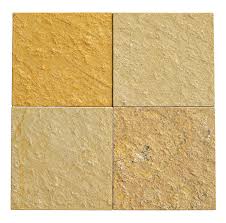
A high-density, frost-resistant Indian limestone displaying warm golden-honey, amber, and olive-ochre tones with natural clouding. Featuring a flatter cleft than sandstone, near-zero porosity, and excellent slip resistance, Kota Honey is widely exported to Europe, the UK, and Australia as an uplifting, warm alternative to grey and dark paving flags. It captures natural sunlight across shaded courtyards, pool surrounds, and residential terraces while remaining cool under bare feet.
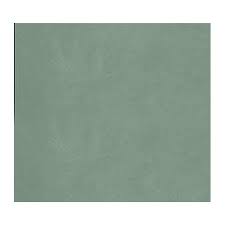
Kota Green Limestone (commercially exported as Kota Green Stone, Lime Green, or Olive Kota) is the signature calcareous stone extracted from the Suket–Ramganj Mandi geological belt in the Kota district of Rajasthan, India. While it belongs to the broader "Kota Blue" sedimentary formation, Kota Green is hand-selected from specific quarry benches where trace chlorite minerals and ferrous silicates impart a distinctive muted sage-green to greenish-slate hue. Renowned for its natural flat-cleaved split, high mechanical density, and ultra-low water absorption, it provides an organic, slip-resistant surface that remains cool under direct solar radiation.